
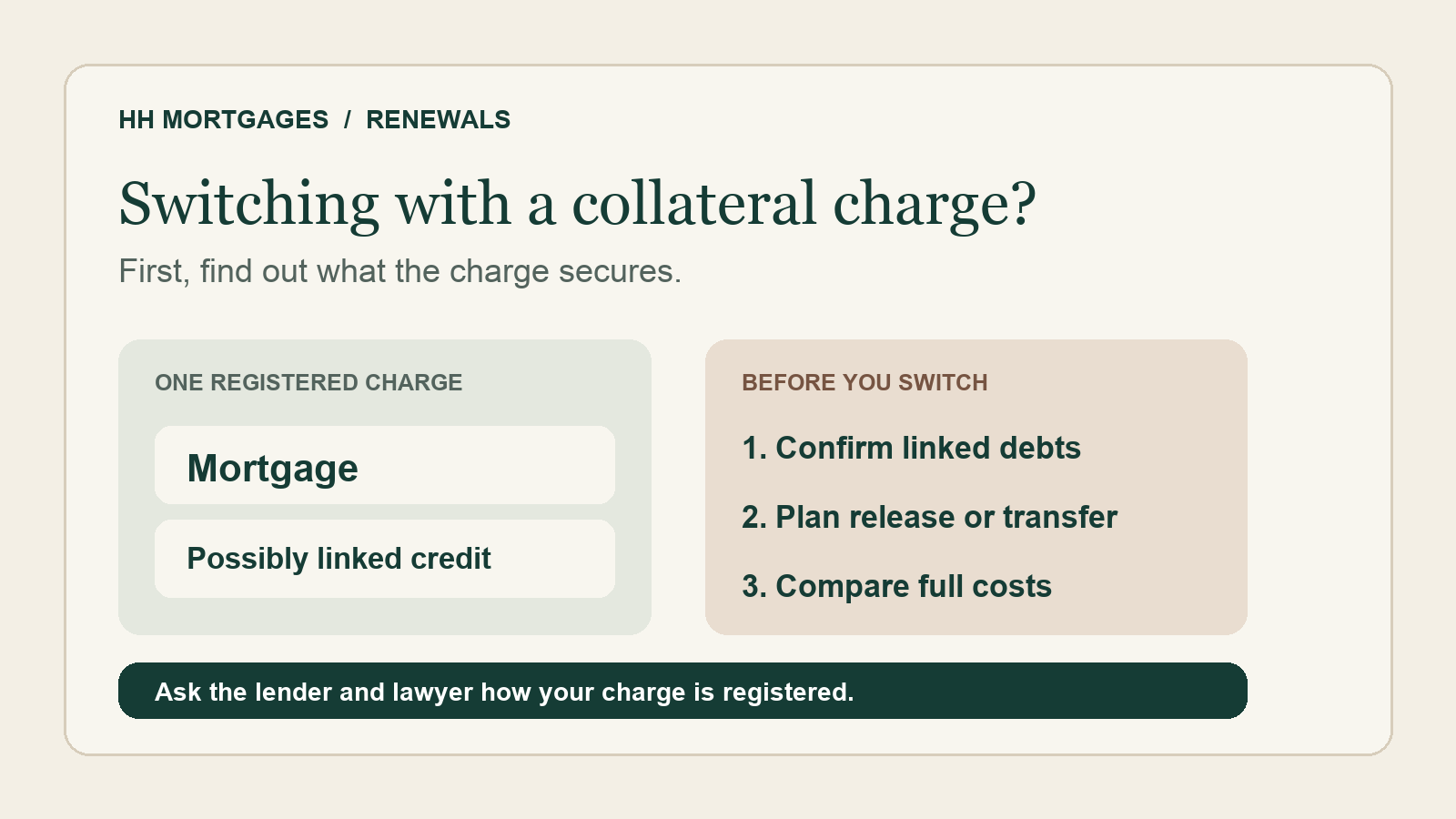
A collateral charge does not mean you are trapped with your mortgage lender. You can explore a switch at renewal. But the registered charge may secure more than the mortgage balance, and moving to another lender can involve extra steps and costs.
The practical question is not simply “Can I get a better rate elsewhere?” It is: What debts are secured by the charge on my home, and what must happen to each one before another lender can register its mortgage? Get that answer early enough to compare the full cost of switching.
What is a collateral charge?
A mortgage lender registers a legal interest, called a charge, against the property that secures the loan. A collateral charge may secure the mortgage and other borrowing with the same lender, such as a home equity line of credit. The exact obligations depend on the agreements you signed.
The Financial Consumer Agency of Canada (FCAC) tells borrowers to ask whether their mortgage has a standard or collateral charge. The name matters because it can change the work required to move the financing.
Do not assume that a registered amount on title is the amount you currently owe. Ask your lender or lawyer to explain what the charge secures, the current balances and the release requirements. This is a document question, not something a rate advertisement can answer.
Why can switching take more work?
When you switch lenders, the new lender must approve the application and the property title needs to accommodate the new security. FCAC explains that removing a collateral charge can require you to repay or transfer all loan agreements secured by that charge, including a line of credit or another linked loan. The existing charge may need to be discharged and the new one registered.
Imagine that your mortgage is up for renewal and you also have a home equity line of credit secured under the same charge. A new lender offers attractive mortgage terms. The rate comparison alone is incomplete: you need to find out what happens to the line of credit, whether the new lender will accept it, what must be paid out, and what legal or registration work is needed.
That does not mean every collateral-charge mortgage carries a linked line of credit or that every switch follows the same path. It means you need the actual contract and title details before treating the move as a simple transfer.
What costs should you compare?
FCAC lists possible switching costs that can include discharge, registration, transfer or assignment fees, an appraisal if needed, and other administrative charges. Ask the proposed lender which costs it will cover, if any, and get that offer in writing. See the FCAC renewal guide for the categories to check.
If you switch before the end of your current term, a prepayment penalty may be a separate issue. My prepayment-privileges guide explains why extra payments and breaking a contract are different decisions. If you are switching at renewal, compare the new terms and all transaction costs without assuming that the lowest advertised rate gives the lowest total cost.
The FCAC's discharge guide also notes that paying off a mortgage does not automatically remove the lender's registered interest in the property. A discharge is a separate process. If another product remains secured by the charge, discuss it with the lender and lawyer before expecting the registration to be released.
Five questions to ask before renewal
- Is my mortgage registered as a standard or collateral charge? Ask the current lender, lawyer or notary; do not guess from the product name.
- Which accounts does that charge secure? Request balances and details for the mortgage, any line of credit and any other linked borrowing.
- What must be repaid, closed or transferred to switch? Ask both lenders to explain the sequence and timing.
- What is the full cost of the move? Include discharge, registration, legal, appraisal and administrative costs where applicable, along with any penalty if the term is being broken.
- Will the new lender approve the whole arrangement? It can apply its own qualification and property criteria, even if your current lender is ready to renew.
FCAC recommends starting to shop around a few months before renewal. This gives time to confirm the registration, collect payout details and compare actual written offers. My broader Ontario renewal guide covers the other terms worth reviewing before you sign.
What I would pay attention to
I would look at two plans side by side: staying with the current lender under revised terms, and switching with every cost and linked debt accounted for. I would also ask what flexibility you want later. A line of credit that is useful today can affect how straightforward a future switch will be.
A collateral charge is one feature of the financing, not a verdict on whether a mortgage is good or bad. If you are approaching renewal and are unsure what is registered against your home, send me a message and we can identify the questions to take to your lender and lawyer before comparing options.
This is general mortgage information, not legal advice or a commitment to lend. The charge, linked accounts, fees and transfer options depend on your documents and lender policies. A lawyer can advise on title and discharge requirements.