
Being self-employed does not automatically make you ineligible for a mortgage. It does mean the lender has to understand income that may vary from month to month, how your business is structured, and what the records actually show.
The most useful first step is to gather your tax and business documents before you settle on a purchase budget. A healthy year of sales, cash in a business account and income a lender accepts for a mortgage are related, but they are not necessarily the same number.
What income does the lender look at?
A lender reviews the full application: income, debts, credit, down-payment funds and the property. For a self-employed applicant, the income discussion often takes more work because a pay stub alone does not explain the business.
The Financial Consumer Agency of Canada (FCAC) says lenders or brokers may ask self-employed borrowers for Canada Revenue Agency Notices of Assessment from the past two years. The CMHC Self-Employed program describes a wider set of possible evidence, including tax returns, business records, statements and contracts, depending on the borrower and the mortgage insurer's rules.
That does not mean every lender will accept every document or use the same income figure. The business type, consistency of earnings, deductions and the intended mortgage product can all affect the review. Ask your mortgage professional which number a prospective lender is likely to use and what supports it.
Which documents should you collect?
Start with a simple folder for each of these groups:
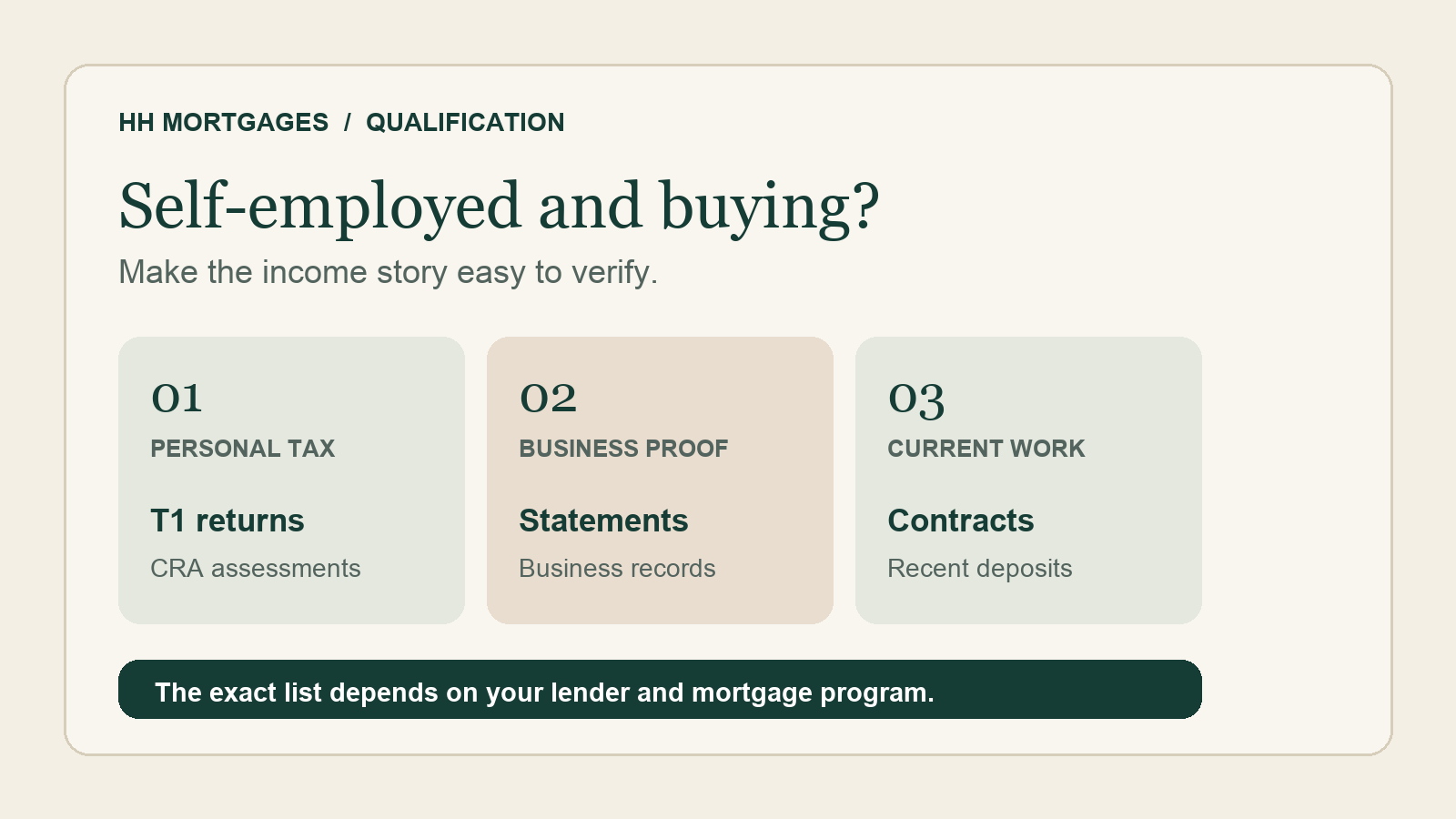
- Personal tax records. Your recent T1 returns and corresponding CRA Notices of Assessment help show what was reported and assessed.
- Business records. Depending on how you operate, this could include a T2125 statement of business activities, financial statements, business account statements, GST/HST filings, incorporation documents or a business licence.
- Current work. Contracts, invoices and recent deposits can help explain whether income is continuing, especially if this year's business looks different from the last tax return.
- The rest of the mortgage file. Identification, credit obligations, down-payment statements and the property details still matter. My broader mortgage documents checklist covers those items.
This is a preparation list, not a promise that any one file will satisfy a lender. CMHC lists several documentation options for its self-employed insurance program, but the lender and insurer must decide what they need in a specific case. Ask for the exact list early, and keep documents complete and consistent.
What if you have been self-employed for less than two years?
Do not rule yourself out based on a single rule of thumb. CMHC says 24 months of business operation or experience in the same line of work is recommended for its Self-Employed program, while describing flexible considerations for people who are newer to self-employment. Those can include prior experience, a predictable pattern of earnings and cash reserves.
That is program guidance, not a general approval rule for all lenders. A newly incorporated professional who worked in the same field for years, for example, may have a different evidence story from someone starting an unrelated business with no operating history. Neither example guarantees approval. Bring your work history and business transition documents so the lender can assess the real picture.
Will tax deductions reduce what you can borrow?
Tax deductions can make the income reported on a return look different from your business's gross sales. CMHC's Self-Employed program says eligible deductions may be treated differently when verifying income for some sole proprietorships or partnerships. The details are program-specific; it would be misleading to add back every business expense yourself and call the result “mortgage income.”
Do not change legitimate tax reporting just to make an application look stronger. Instead, give the lender or mortgage professional the full returns and statements, then ask how income would be calculated under the products actually available to you. A tax professional can advise on the tax side; the lender decides the mortgage side.
What I would do before making an offer
I would review the most recent two completed tax years, the current year's business trend and the cash you need for the down payment and closing. If the business recently changed, I would explain the change in one short timeline, supported by records, rather than hoping the lender infers it from scattered statements.
I would also distinguish a rough budget conversation from a full review. The FCAC notes that pre-approval is not final approval; the property and complete documents still matter. My pre-approval versus final approval guide explains what can change after an offer is accepted.
Self-employed files are easiest to discuss when the income story is clear and the records match it. If you want to organize yours before you start shopping, send me a message and we can identify the documents and questions worth taking to a lender.
This is general mortgage information for Canadian readers, not tax advice or a commitment to lend. Documentation, eligible income and approval depend on the lender, insurer, property and individual circumstances.