HELOC or Refinance: Which One Fits in Ontario?
On this page
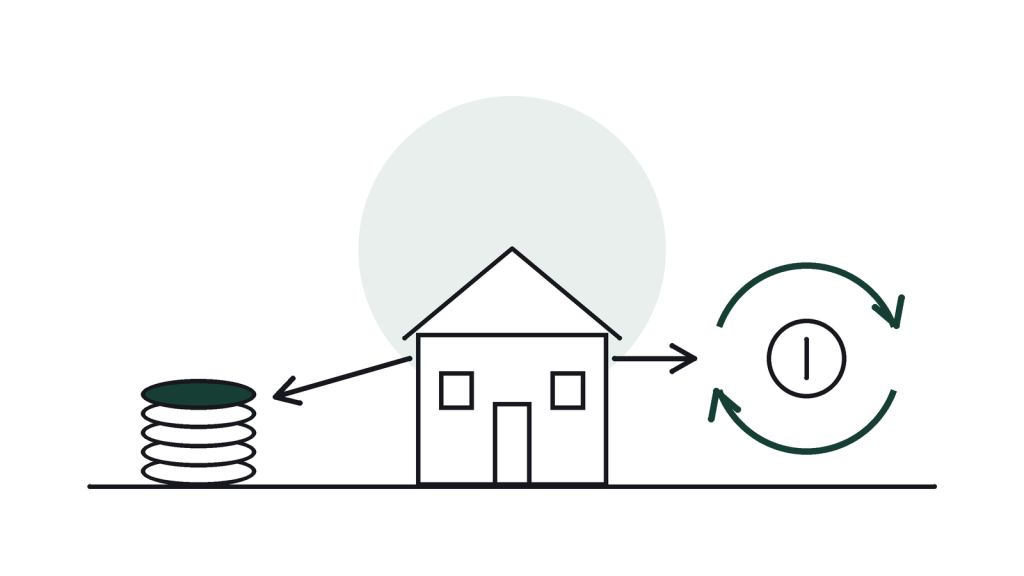
Ellie and I run a small rug business, Rug the Rock, and it taught me that there are two kinds of expenses: the ones you pay once, and the ones that keep coming back. Borrowing against your home works the same way, and that’s really the whole choice between a HELOC and a refinance.
The short answer: a refinance fits when you need one large, known amount and want to pay it down on a schedule, especially if your mortgage is close to renewal. A home equity line of credit (HELOC) fits when costs come in stages, when you may not need all the money, or when breaking your current mortgage would mean a large penalty. A HELOC is flexible, and that flexibility is also its risk: the rate moves, and the balance only goes down if you make it.
How each one works
Refinance. You replace your mortgage with a new, larger one and take the difference in cash. You get one rate, one payment and a set amortization. In general you can refinance up to 80% of your home’s value.
HELOC. You keep your mortgage and add a revolving line of credit secured by the home. You borrow, repay and borrow again, and you pay interest only on what you use. According to the Financial Consumer Agency of Canada, the line itself can go up to 65% of your home’s value, and your mortgage plus the HELOC generally can’t go past 80%.
Side by side
| Refinance | HELOC | |
|---|---|---|
| How you get the money | One lump sum | As you need it, up to the limit |
| Rate | Fixed or variable mortgage rate | Variable. FCAC notes the lender may change it at any time |
| Payment | Principal and interest, so the balance goes down | Can be interest only, so the balance may not move |
| Penalty | Yes, if you break your mortgage mid-term. None at renewal | No penalty on your existing mortgage, because you don’t touch it |
| Stress test | Applies | Applies at a bank |
| Usual fees | Appraisal, legal, discharge | Appraisal, legal, title search, sometimes admin fees |
How much can you borrow?
An example with made-up numbers: your home is worth $900,000 and you owe $400,000. Eighty percent of the value is $720,000, so the most you could add, by either route, is about $320,000. What you actually qualify for depends on your income, debts, credit and the lender’s appraisal.
What does $60,000 cost each way?
Again with made-up rates:
- HELOC at 6.50%, interest only: about $325 a month. After five years of minimum payments you still owe $60,000.
- Refinance at 4.50%, amortized over 25 years: about $332 a month for that $60,000. Every payment reduces the balance.
The payments are nearly the same, and the results are very different. The HELOC only wins on cost if you pay it down on your own, and plenty of people intend to and don’t. On the other side, if refinancing today means a five-figure penalty to break your mortgage, the lower rate may not be worth it. Check how your penalty is calculated first.
A refinance usually fits when
- you need one large amount, such as a major renovation with a fixed quote or paying off higher-interest debt
- your mortgage is at or near renewal, so there’s no penalty
- you want a fixed payment and a clear end date
- you know yourself, and an open credit line would be too tempting
A HELOC usually fits when
- costs come in stages, or you’re not sure of the total
- your current mortgage has a low rate or a large penalty you don’t want to trigger
- you expect to repay within a couple of years, for example from a bonus or a sale
- you want a backup you may never use
Three things to check before choosing
- Your maturity date and penalty. If renewal is within a few months, waiting and refinancing then is often the cheapest route.
- How the HELOC is registered. A HELOC combined with your mortgage usually means a collateral charge, which affects switching lenders later.
- The payment if rates rise. A HELOC rate can change. Work out the interest at a rate one or two points higher and see if it still fits your budget.
To compare your own numbers, try the refinance calculator. My refinancing guide covers the costs in more detail.
Not sure which one fits? Tell me what you need the money for, your balance and your renewal date, in English or Persian. I’ll get back to you the same business day with both options side by side.
General education for Ontario readers, not individual mortgage, tax or legal advice or a promise of funding. The examples use made-up values and rates. Borrowing limits, rates, fees, penalties and qualification depend on the lender, the product, your application and the property. Borrowing against your home puts it at risk if you can’t repay. Hanif Hosseini, Mortgage Agent Level 1, M26001653. Mortgage Architects, brokerage licence #12728. Serving Ontario, based in Oakville.