Can You Switch Mortgage Lenders at Renewal Without the Stress Test?
On this page
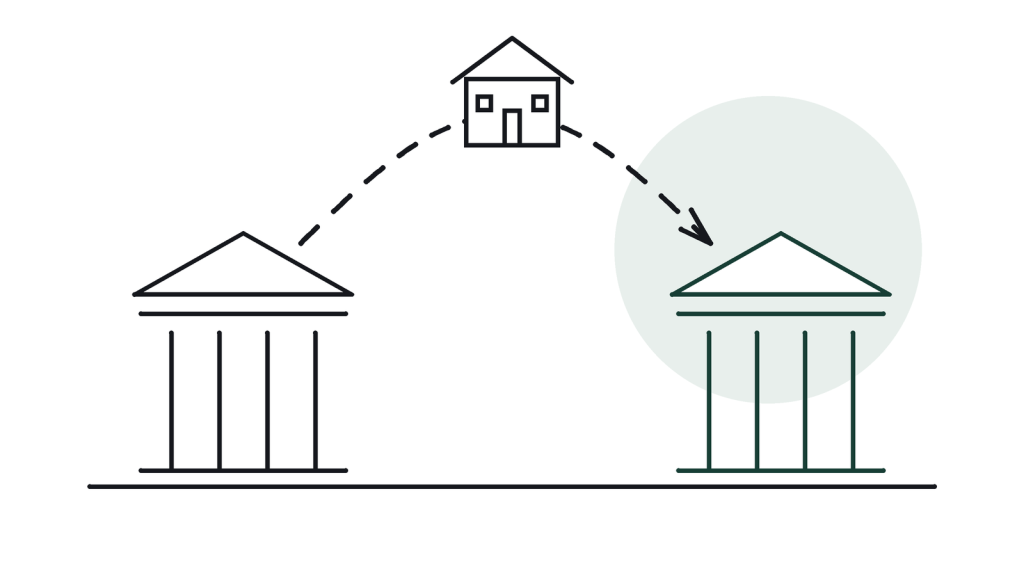
Back in my procurement days, a cheaper supplier was never the whole story. The real questions were always: what does it cost to move, how long does it take, and what could go wrong in between? Switching your mortgage at renewal is the same deal.
The short answer: yes, in most cases you can now move your mortgage to a new lender at renewal without passing the stress test again, as long as you keep the same loan amount and don’t stretch the amortization. If you switch on your renewal date, there’s no prepayment penalty. The costs are usually modest, and many lenders cover part of them. The part people get wrong is the timing.
Do you still have to pass the stress test?
Not if it’s a “straight switch.” On November 21, 2024, OSFI dropped the stress test for uninsured mortgages that move from one federally regulated lender to another at renewal. Insured mortgages were already exempt, and insurable ones were added in December 2024.
A straight switch means:
- Same loan amount. OSFI allows the balance to go up by at most $3,000 to cover transaction costs like fees. No taking out equity.
- Same or shorter amortization. You can’t add years to the remaining amortization.
- A plain mortgage. OSFI’s exemption covers a stand-alone mortgage, including a collateral charge, but not a readvanceable mortgage bundled with a line of credit.
Two things haven’t changed. The new lender still reviews your file like any new mortgage: your credit, income, debts and the property. And credit unions and other provincially regulated lenders set their own rules, so ask them directly.
What switching actually costs
| Cost | Who usually pays | What to check |
|---|---|---|
| Discharge fee from your current lender | You | Your mortgage terms or the lender’s fee schedule list it |
| Legal or title work for the new registration | Often the new lender, on a standard switch | Ask in writing what they cover |
| Appraisal | Often the new lender, if one is needed | Some files need a full appraisal, which takes time |
| Prepayment penalty | Nobody, if you switch on your maturity date | Moving before maturity can trigger one (how penalties work) |
| Collateral charge re-registration | Varies | May need a lawyer (what to check) |
Get the full list of costs from the new lender before you sign. A rate that is 0.30% lower can lose its shine if you are paying fees the other lender would have covered.
Is a small rate difference worth the switch?
An example with made-up numbers: a $500,000 balance with 20 years left costs about $3,071 a month at 4.19% and about $3,149 at 4.49%. That’s about $78 a month, or roughly $4,700 in payments over a five-year term.
Try your own numbers in the renewal calculator. Then put the result next to the fees and the other terms: prepayment privileges, penalty calculation and portability matter if your plans might change.
The timing that works
- About 120 days out: get your four numbers (term end date, balance, remaining amortization, payment) and request quotes. Many lenders will hold a rate for a switch for a period before your renewal date, often up to about 120 days. Ask how long, in writing.
- 60 to 90 days out: pick a lender and apply. Expect to send an employment letter, recent pay stubs, your latest mortgage statement and property tax proof.
- 30 days out: the switch should be approved, with the lawyer or title company working on the paperwork.
- Renewal day: the new lender pays out the old one, and your first payment goes to the new lender.
If the switch isn’t ready by your maturity date, you could end up in a short-term or open product at your current lender, usually at a higher rate. That’s the most expensive way to switch. Starting early avoids it.
When it’s not a straight switch
If you want to borrow more, add years to the amortization, or combine the mortgage with a line of credit, it’s a refinance, not a switch. The stress test applies, and approval works differently. My refinancing guide explains what changes.
Before you sign anything
- Read your renewal letter the day it arrives and note the reply deadline.
- Get at least one outside quote, even if you plan to stay. It’s your best negotiating tool.
- Ask the new lender which costs they cover and how long the rate hold lasts.
- Check whether your current mortgage is a standard or collateral charge.
- Compare the whole package, not just the rate. Here’s how to compare offers beyond the rate.
Thinking about switching? Send me your renewal date and current terms, in English or Persian. I’ll get back to you the same business day and tell you honestly if staying put is the better deal.
For the full 120-day plan, see Renewing your mortgage in 2027? Start 120 days early.
General education for Ontario readers, not individual mortgage or legal advice or a promise of funding. The payment example uses made-up numbers. Eligibility for a straight switch, fees, rate holds and timing depend on the lender, the mortgage and the property. Hanif Hosseini, Mortgage Agent Level 1, M26001653. Mortgage Architects, brokerage licence #12728. Serving Ontario, based in Oakville.